Holy Grail Nymph
– 1 min read
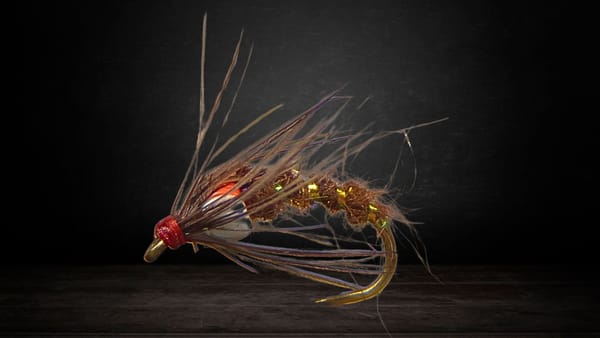
Flies come with a varying array of names, some quirky, some direct, but in my opinion this fly here earns its name.
If you're new to fly tying and see this fly for the first time it may look intimidating, but in reality it's not that difficult.
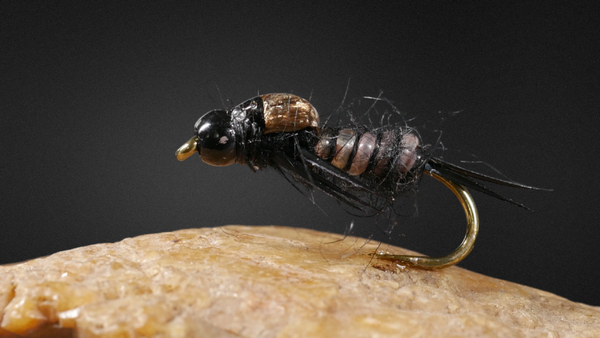
The confusing part is that the bead isn't at the eye like most nymphs you would tie. It sits a little behind, with a wing case pulled over it and a hackle wrapped in front of it.
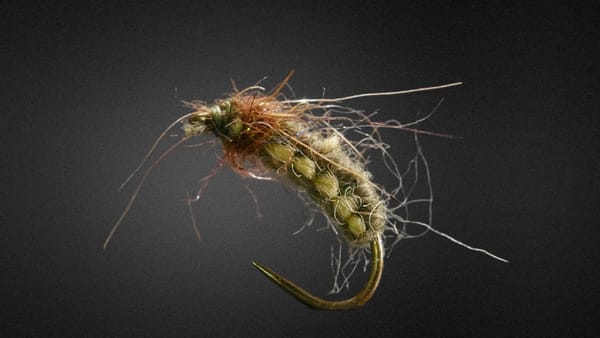
That buried bead is why mine gets a white one. A caddis pupa on its way to the surface carries a bubble of gas under its skin, and a white bead glowing through the wing case does a better job of that bubble than any metal head at the eye ever will.
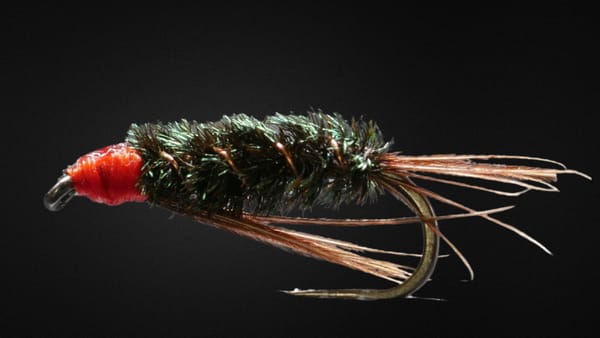
You still get the tungsten to sink it, and the red thread builds you a hotspot at the head for free.
Olive rabbit is my body, but this fly forgives almost any buggy dubbing. Natural hare works, and black is worth a few slots for dark water.
Nevertheless, whether you are new to tying or not, I'd argue that your box wouldn't be complete without a few of these, wherever you may be fishing.
This is a forgiving fly to fish. Dead drift it under an indicator or behind a dry, and let it swing up at the end of the drift like a pupa making its run for the surface, because a lot of takes come right there.
The 2.4 bead is also light enough for shallow edge water where a heavier nymph would just find the bottom. It earns its keep in stillwater too.