Free Living Caddis
– 2 min read
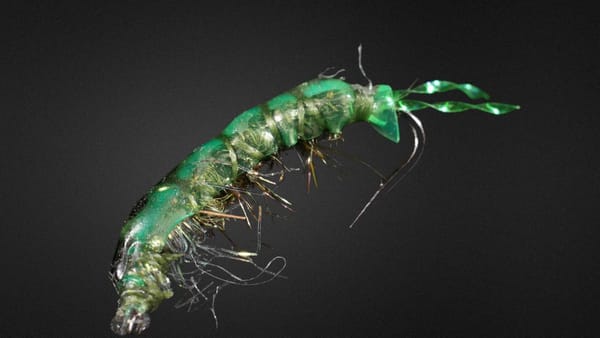
The free-living caddis larva is one of my favorite flies to tie, partially because it fishes so well.
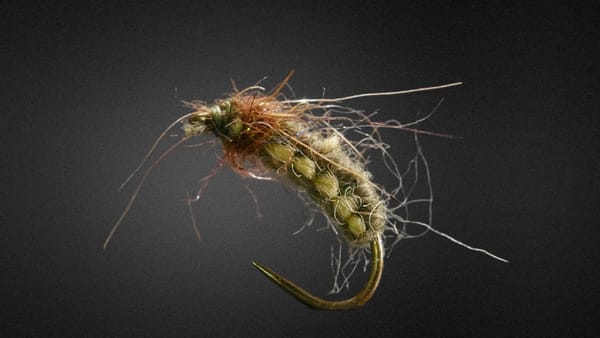
Like most caddis larvae, there are numerous ways to tie this. I like the pattern below because it's more realistic than impressionistic, yet still incredibly durable.
This fly is fished in fast, turbulent water. To handle those conditions, it gets plenty of weight from the lead-free wire, and rock-solid durability from the scud back and UV resin.
It's also a relatively simple fly to tie, and it doesn't require any extra or obscure materials beyond what you probably already have at your bench.
Let’s talk about why this fly gets eaten. The free-living caddis doesn't build a case of sticks or stones to hide in.
It roams the river bottom completely exposed. To a trout, that means it is 100% easily digestible protein.
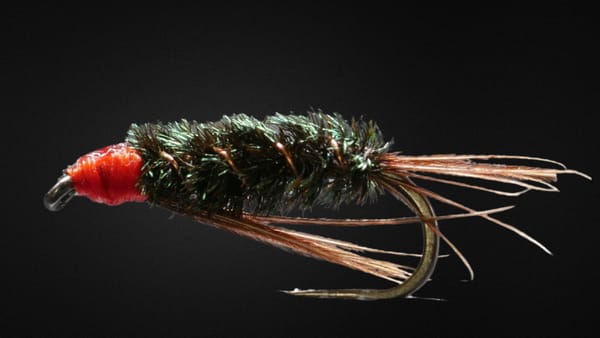
Because they don't have a case, they rely on exposed gills to breathe. That is exactly what the peacock herl is doing on this pattern.
When this fly gets wet, all the little micro-barbs on the herl splay out in the current and perfectly mimic those gills.
Combine that with the bright green body acting like a beacon underwater, and the Krystal Flash mimicking the little anal hooks they use to cling to rocks, and you have a high-value target that trout simply can't ignore.
These bugs live in the most highly oxygenated, turbulent water in the river, so that is exactly where you need to fish this pattern.
I designed this fly to be heavy. With the lead-free wire underbody and the sleek UV resin back, it cuts through heavy current and sinks like a rock.
It makes a perfect anchor fly on a Euro nymphing rig, or you can drop it deep under an indicator.
Target fast riffles, pocket water, and the seams just downstream of heavy rapids.
Trout will hold in the softer water right behind these turbulent sections, just waiting for these green rock worms to get ripped off the bottom and washed downstream.
Roll it right along the bottom, get it wet, and let me know how it fishes.