F Fly
– 1 min read

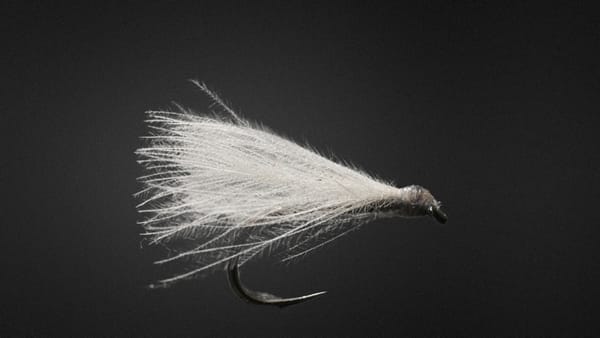
The F fly is one of the simplest patterns you can tie, and it actually works.
It was designed in the 1980s as a fly that could be tied quickly and cover a range of conditions, and it has stayed popular with beginners and experienced tyers ever since. Part of the appeal is speed.
Once you get the hang of it you can fill a row of your box in an evening, which matters because these are the kind of fly you lose to a snag or a good fish and never think twice about.
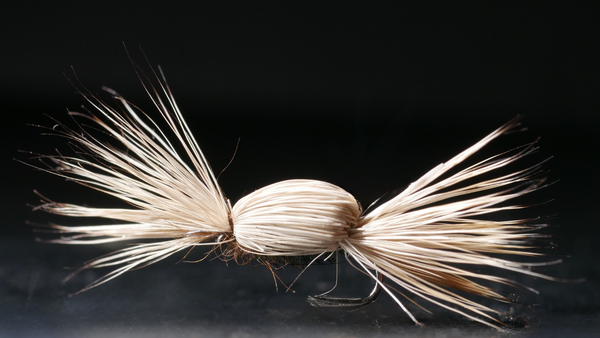
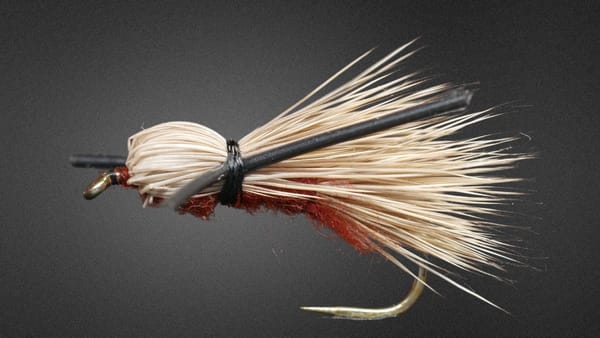
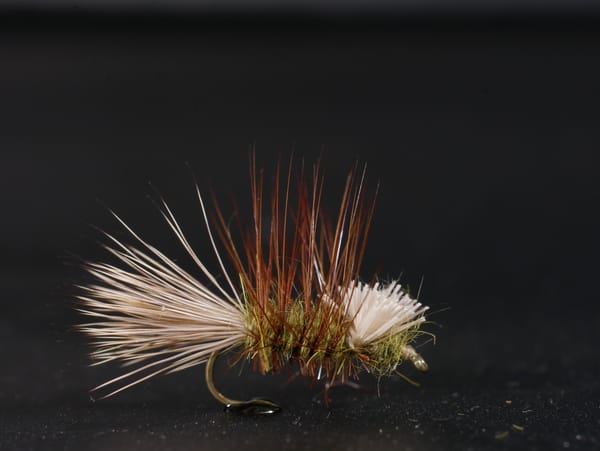
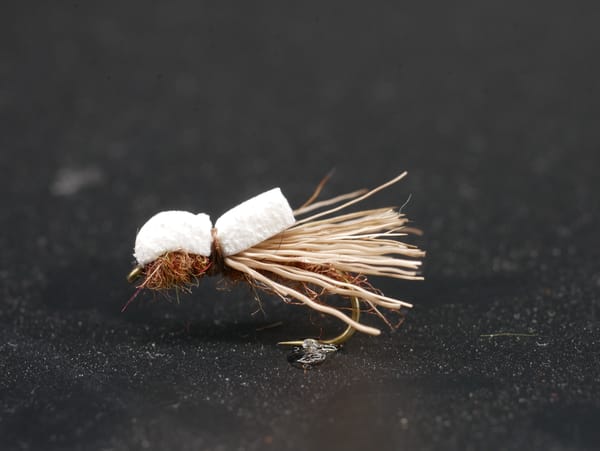
The single material doing the heavy lifting is CDC. Most tyers already know what a powerhouse it is, and this fly is really a demonstration of that. The oils in the feather and the fine barbules trap air, so it sits low in the film and keeps floating without any floatant. When it does get waterlogged, a few false casts bring it back.
I mostly tie it in natural, keeping in mind that natural runs anywhere from white to gray to brownish. This one is on the whiter side. Colors are up to you though. A darker dun or a black wing is worth having in the box for flat light or stained water.
Fish it dead drift on the surface or right in the film. It reads as an emerger, a spent spinner, or a drowned adult depending on how it lands, and the trout sort out which.
When you get refusals in slow clear water, size down and check the wing is sparse. Too much CDC is the usual reason an F fly sits too high and looks wrong.