October Caddis
– 2 min read


Most people fish October caddis on top. Which is fair, because when the females are down laying eggs, that fishing is a blast. But you're missing the bulk of the eating if you skip the pupa.
October caddis don't hatch like most caddisflies.
Instead of drifting up through the water column and cracking through the film, most of them swim along the stream bed toward shore, then crawl up an exposed rock and split their shucks in the open air.
That horizontal swim across the bottom is where fish clean them up. Big, orange, moving predictably through the strike zone, easy pickings.
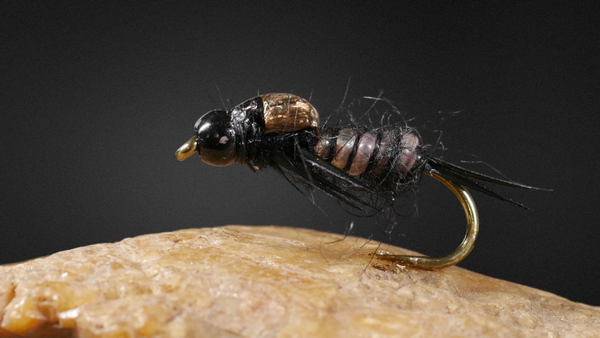
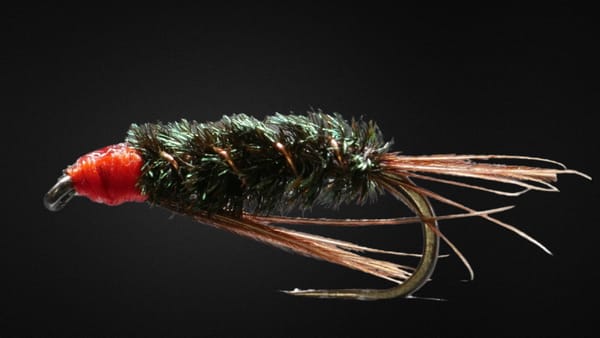
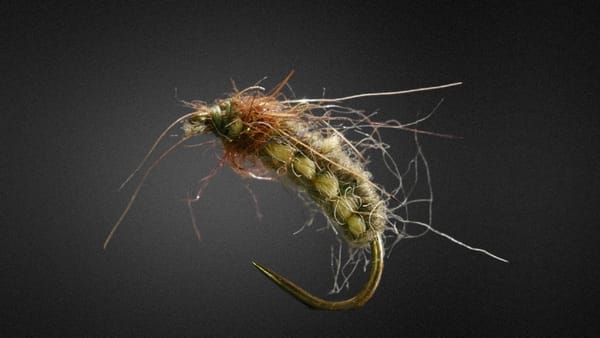
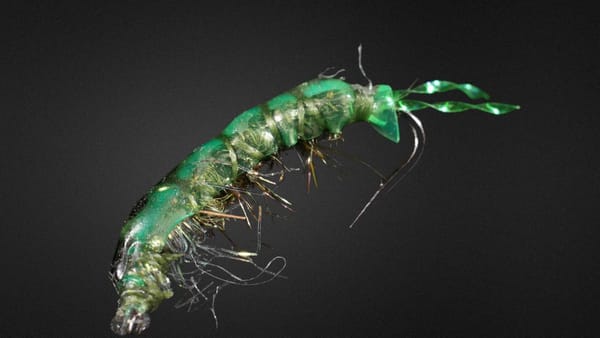
This is my version. I'm tying it on a size 10 short shank because I don't like throwing a size 4 anchor around, and the pupa itself is smaller than most people think anyway.
The larva in the case is big, but the pupa that comes out has already burned through a chunk of that body mass during transformation. A size 10 to size 8 covers it for most water.
If you're fishing bigger water and want more presence, tie it on an XL shank and size up the rib.
Body is vinyl rib with the flat side colored orange with a sharpie, laid over a UV orange dubbing underbody.
The rib gives you clean segmentation you can see from a few feet down. The dubbing between does the glow work when it's wet.
Thorax is a shaggier squirrel antron hare's ear blend, a shade darker than the body, because the mature pupa darkens toward the front as the wing pads develop.
Orange is the part you don't skip. The adults on the wing are called the giant orange sedge for a reason. If your water runs stained, black works. If you're not sure, orange.
Get it deep. With the bead and the wire, this thing wants to ride on the bottom, which is where the pupae are.
Dead drift it through the deeper edges of runs where the current starts to slow toward the bank.
Late afternoon into dusk is when the emergence kicks off, so that's your window.
Swing it at the end of the drift with a little rod tip lift, mimicking the bug moving across the substrate toward shore. If you're getting refusals, drop a size and run it through again.