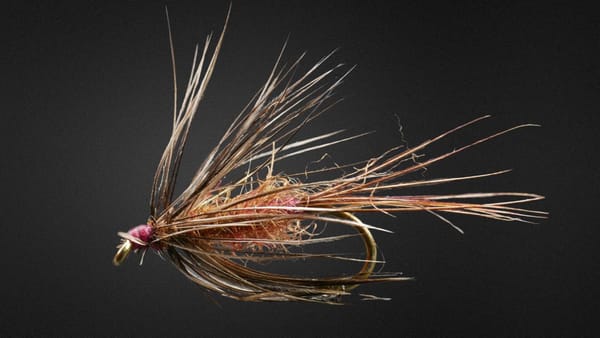
Diving Grannom Caddis
– 2 min read

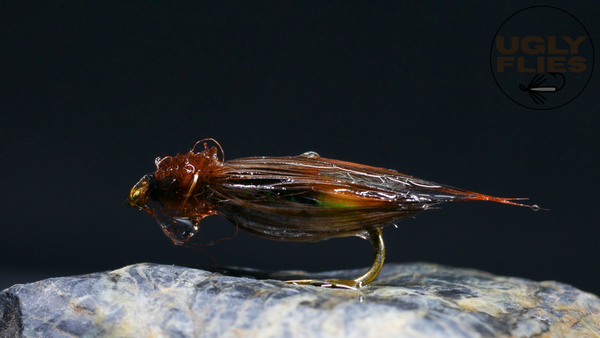
This one's for the back half of a caddis hatch, when the adults have mated and the females are heading back to the water to lay their eggs.
Most tiers cover the dry and maybe a pupa and stop there. The egg-laying diver is the stage everyone skips, and it's often the one the fish are keyed on right at last light when you can't figure out why they've stopped taking your dry.
The white Antron along the top is doing the work here. When a female grannom dives to lay her eggs she carries a film of air trapped against her body, and it flashes silver as she swims down.
That flash is a trigger. The Antron catches light the same way underwater, so you get that silvery gleam without any fancy tying. Wet it, hold it to the light, and you'll see what I mean. That's the difference between this fly and a plain wet caddis.
The chartreuse egg sack is the other half of it. She's carrying eggs, so the fly should too.
I use fluorescent perdigon thread because it holds its color wet and it's a clean bump at the back of the hook, not a fuzzy blob.
Chartreuse is what I reach for, but a bright green or even a pale yellow does the same job depending on what your local caddis are laying.
Black body because that's what most of the grannom types actually are, but this isn't fussy.
Tie it in a dark olive or a dirty brown and it still reads as a caddis to a fish. The soft hackle wing and the grizzly hen out front give it life the moment it hits the current, and that's what sells it as something alive and struggling down through the water.
Fish it on a swing through the slower water, the tail-outs and softer seams where egg-laying females actually work, not the fast pushy stuff.
The 3761 is a heavy hook, and once the rabbit wets out and stops holding air the fly settles on its own into the middle of the column, which is right where you want it.
Give it a slack-line delivery and let it drift and sink before the line comes tight, then let the swing bring it across and up.
The takes come as it starts to rise at the end, right when a real female would be running out of air.
If it's riding too high, don't add weight, just lengthen your leader and give it more slack to get down before the swing takes hold.
Short pulls that won't stick, let it hang a beat longer at the end before you lift.